Back in July, the Instagram algorithm finally earned its keep by putting Philippine Heritage Kitchen‘s Sagada’s Taste & Tell on my feed. When I think of Sagada food, my mental menu is embarrassingly short: Sagada oranges, etag (salted, smoked, or sun-dried pork), pinikpikan (a native chicken soup), yogurt, and mountain rice. That’s about it. Not exactly a list that had me booking a trip to the Cordilleras for a culinary pilgrimage, but then again, I had a feeling I was missing something. There’s only so much you can learn about a place’s food culture from the handful of dishes that make it into the mainstream conversation. So, naturally, I signed myself up for yet another side quest, this time at the New World Hotel in Makati, to find out what else Sagada had been keeping to itself.
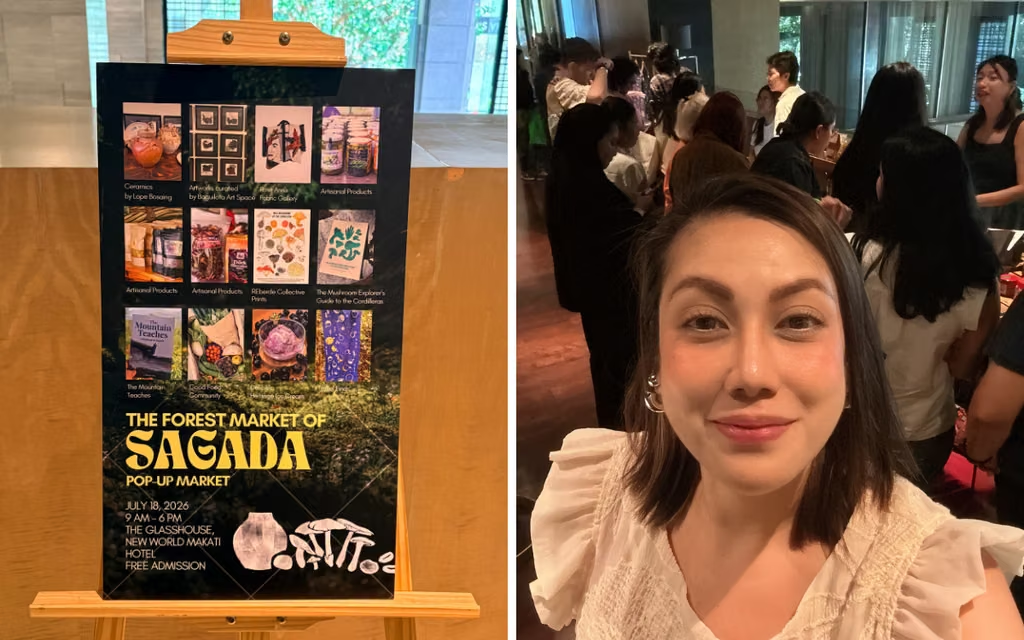
Outside the venue was a little pop-up market, which, unsurprisingly, proved dangerous for my wallet. I came away with a couple of ceramic mushrooms, a worry stone, and The Mushroom Explorer’s Guide to the Cordilleras. I had no real idea what to expect from Taste & Tell, but the mushroom-heavy theme was already giving me a pretty good idea of what was in store.
Now, did I need ceramic mushrooms? No. Did I want all of them? Absolutely. The two I bought now live on my desk, waiting for the live plant I keep telling myself I’ll buy so I can turn the whole thing into a little fairy garden. Unfortunately, with my collection of rescued kittens and cats, that particular dream isn’t happening anytime soon – the cats have already claimed the house, and I’m just the human that pays the bills.
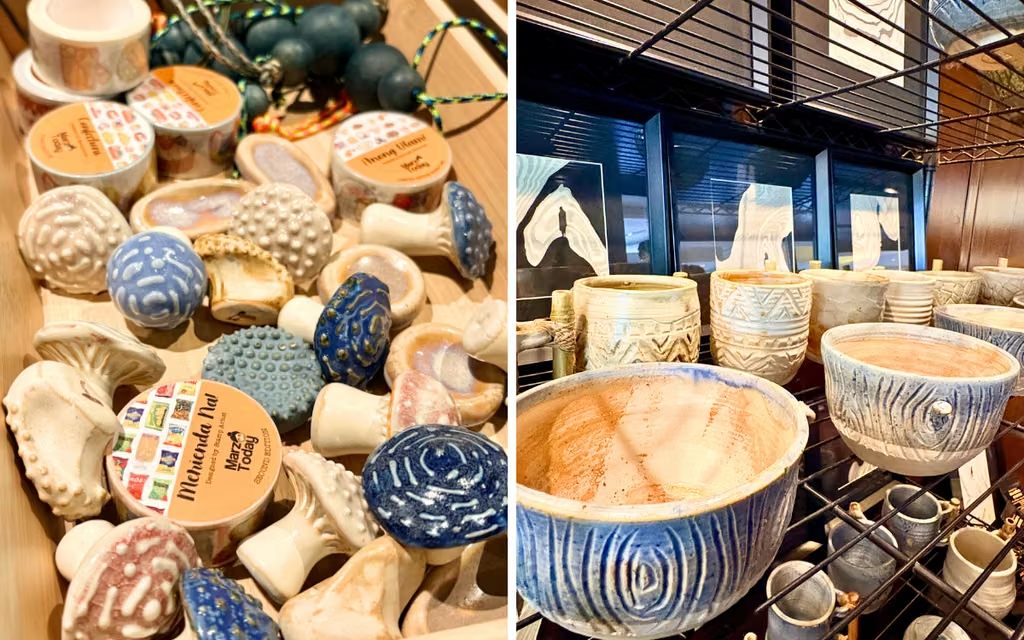
There were also Sagada ceramics for sale, crafted to resemble traditional carved wooden objects like bowls and mugs. Wood carving has long been part of life in the Cordilleras, where artisans shaped timber into functional household objects, from serving bowls and spoons to objects with cultural and ceremonial significance. In Sagada, a carved wooden bowl wasn’t simply something to eat out of; it was also an example of how everyday objects could reflect the skills and resourcefulness of the people who made them.
Sagada’s pottery industry offers another expression of this relationship between craftsmanship, local materials, and everyday life. While pottery has older roots in the Cordillera, the contemporary Sagada pottery enterprise took shape around 2000, when ceramic artist Archie Stapleton helped establish pottery-making as an alternative livelihood for local residents. The area’s clay deposits offered an opportunity to develop a craft that could complement the community’s traditional reliance on farming and, later, tourism. Today, potters such as Siegrid Bangyay and Tessie Baldo collect and process local clay, transforming it into stoneware inspired by the region’s landscape, culture, and indigenous designs.
What I found interesting about the pieces at the market was how some of them took the familiar shapes of carved wooden bowls and mugs and reimagined them in clay. It wasn’t simply a matter of making pottery that looked pretty on a shelf; it was another way of translating a familiar visual language into a different material, while creating objects that could be sold beyond Sagada and help sustain local artisans. Each piece carried something of its place of origin, from the earth it was made from to the hands that shaped it, making it feel like more than just another souvenir stamped with a destination’s name.
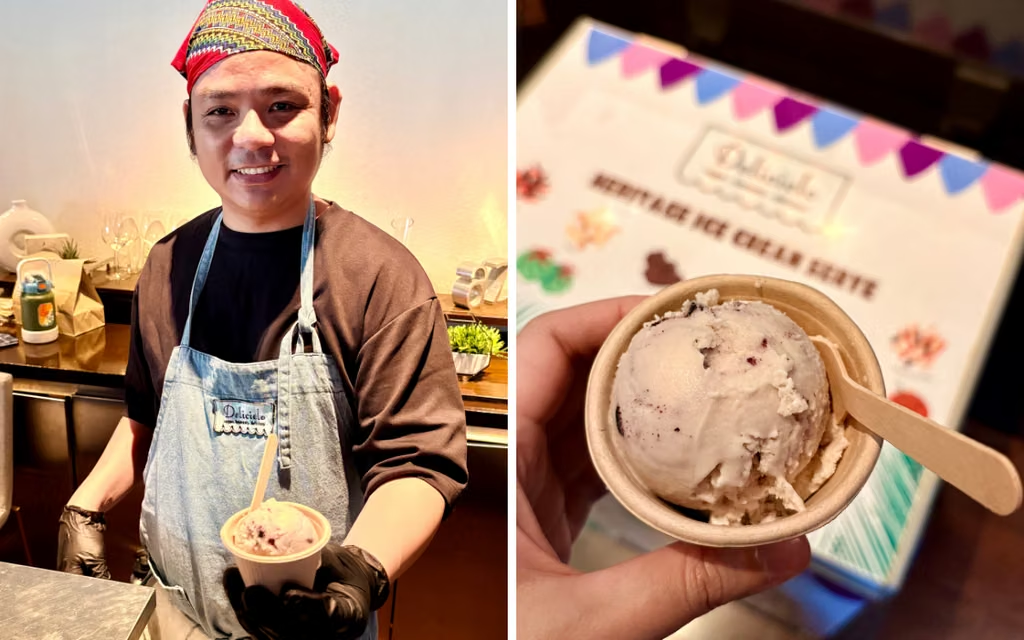
While we waited for the talk to begin, the crowd favorite at the pop up was Delicielo’s Heritage Ice Cream Serye, a collection of dairy-free, vegan ice creams made with a coconut-cashew milk base and flavored with ingredients that showcase the diversity of Philippine food heritage. The lineup included Sampinit (our local raspberry, kind of), Katmon (elephant apple), Kalingag Pili, Balitanaw Coconut, and Kakaw Kasoy Krema. I went for a scoop of Lipote Cheesecake, made with a native berry, and it was a lovely reminder that our local ingredients have so much more potential than we often give them credit for.
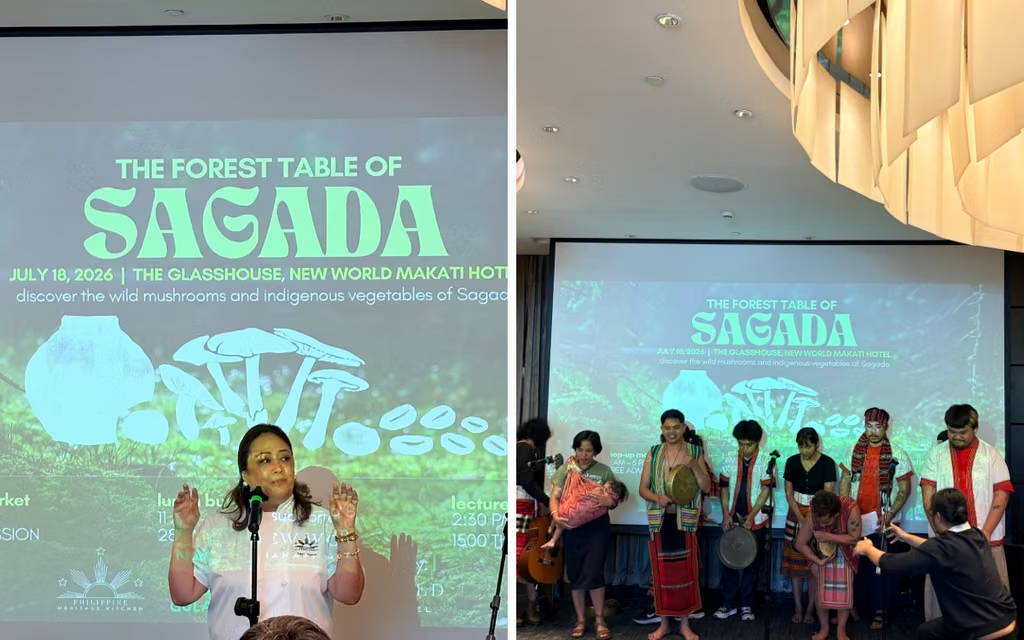
To open the talks, we were treated to performances by Dap-ayan ti Culture iti Kordilyera (DKK), before Chef Reggie Aspiras kicked off the afternoon by talking about her passion for preserving Philippine heritage cuisine and why it matters. And it’s not just about keeping old recipes alive or making sure future generations know how to cook pinikpikan. Food is one of the most accessible ways to understand a place and its people, from the ingredients that grow in their backyards to the cooking methods shaped by their environment, history, livelihoods, and traditions.
One thing that surprised me was learning just how many people in the Cordilleras follow a vegetarian diet. It’s not something I would have expected going into a tasting that I assumed would revolve around the usual mountain fare of pork, native chicken, and other meat-heavy dishes. But that was precisely one of the themes of the afternoon: showcasing the diversity of Cordilleran food beyond the dishes that have become synonymous with the region. Chef Reggie also gave a special acknowledgement to Chef Laorence Casillo of the Gulay Na! collective for helping put together the dishes we would be tasting later that day, highlighting the importance of vegetables and plant-based ingredients in the region’s food culture.
Preserving a cuisine begins with learning about the communities that created it. What grows in the soil? What can be foraged from the surrounding forests? What do people grow, raise, trade, or gather to put food on the table? How do the seasons, geography, and local customs influence what ends up in the pot? And what do people eat when meat isn’t the centerpiece of a meal? These are the details that turn a recipe from a list of ingredients and instructions into a record of how people live.
It’s also a reminder of how easily we can reduce an entire region’s food culture to a handful of familiar dishes. When we think of Cordilleran cuisine, etag and pinikpikan tend to come to mind first, but there’s so much more to discover in the vegetables, wild mushrooms, ferns, grains, and fermented ingredients that grow and thrive in the highlands. Understanding these food traditions means looking beyond what’s served on a plate and learning about the people, practices, and relationships with the land that brought those dishes to the table in the first place.
Which, as it turned out, was exactly why I’d signed up for this particular side quest in the first place.
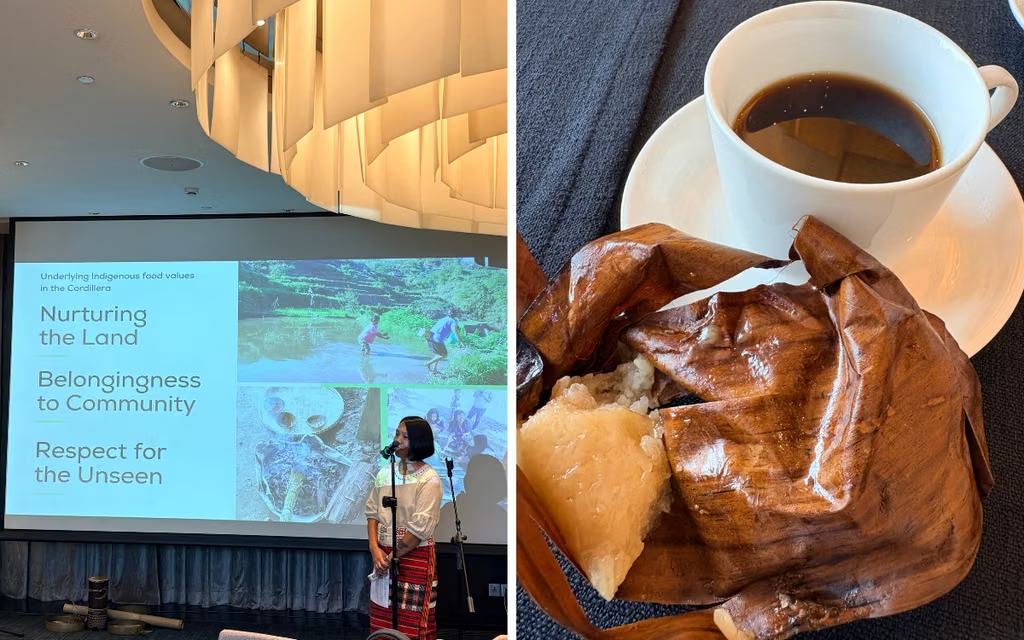
Each short talk came paired with food inspired by the discussion, which I thought was a lovely way to bring the stories to life. It’s one thing to hear about a place’s food traditions, but quite another to actually taste the ingredients and techniques that have sustained its communities for generations.
We started with patupat, a traditional rice cake, alongside a wonderfully fragrant cup of Tupag Sagada Arabica coffee. Unlike the suman most of us are familiar with, which is typically made with glutinous rice wrapped in banana leaves and steamed into soft, sticky parcels, patupat is traditionally associated with the Ilocano and Cordilleran regions and is often prepared using rice cooked in woven palm-leaf casings. The shape and preparation give it a character of its own, a reminder that even something as seemingly straightforward as rice wrapped in leaves can take on different forms depending on where you are in the Philippines. It was a gentle introduction to the afternoon, bringing us back to the everyday staples that make up a place’s food culture. Coffee, in particular, felt fitting for Sagada, where the cool mountain climate and highland agriculture have helped make locally grown Arabica part of the region’s identity.
While tucking into our sticky little parcels of rice, Kinja Tauli of Partners for Indigenous Knowledge Philippines guided us through the food systems of the Montañosa and the values that underpin them: nurturing the land, having a sense of belonging to the community, and offering respect to the unseen.
I found it refreshing to hear people speak about the earth as a living thing, rather than merely a plot of land to be divided, developed, fought over, or turned into something profitable. It sounds like such a simple distinction, but it changes the way you relate to the world around you. When the land is understood as something that sustains you, that you have a responsibility to care for, and that connects you to generations before and after you, stewardship becomes more than an environmental talking point. It becomes part of how you live.
Somewhere along the way, we’ve managed to convince ourselves that humans stand apart from nature, as though we’re entitled to take whatever we need without having to consider what we leave behind. Capitalism certainly hasn’t helped, with its endless appetite for growth and its tendency to assign monetary value to things that have worth far beyond what they can be sold for. Add our disregard for Indigenous knowledge to the mix, and we end up treating forests as timber reserves, mountains as mining opportunities, and agricultural land as real estate waiting to appreciate in value.
Yet these communities have long understood something we seem to keep forgetting: we aren’t separate from the natural world. We’re part of it, dependent on it, and responsible for how we treat it. We may call ourselves caretakers of Mother Nature, but looking at how we’ve treated the planet, you’d think we’d appointed ourselves its landlords instead.
Listening to Kinja speak about these values while eating food grown, gathered, and prepared within this broader relationship with the land made the discussion feel less abstract. It wasn’t just about preserving old traditions for the sake of nostalgia. It was about recognizing that Indigenous food systems carry knowledge about how to live with the environment rather than simply extract from it. And perhaps that’s one of the most important things we can learn from the people of the Cordilleras: that feeding ourselves should never come at the expense of the very land that makes it possible.
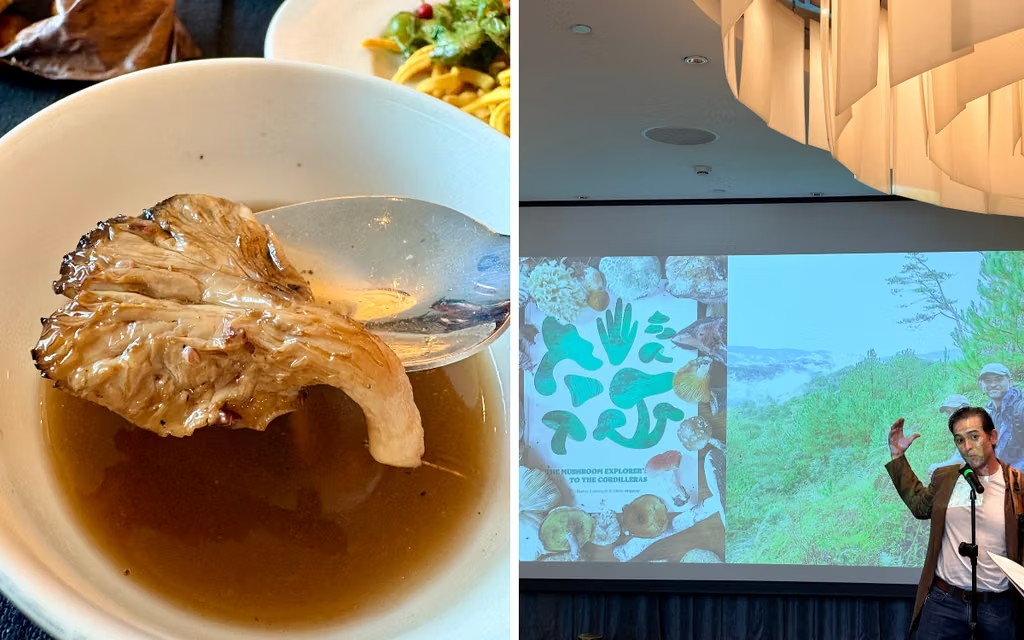
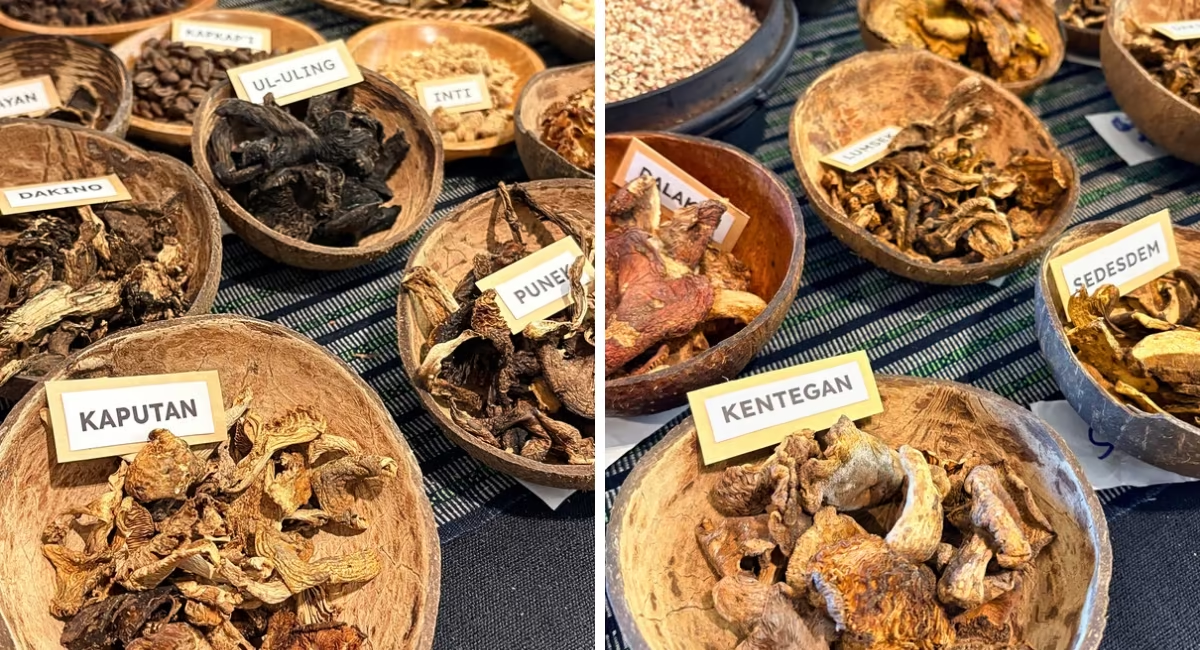
Our next course was sinig timan, an earthy, comforting soup made with foraged mountain mushrooms simmered in a tangy broth of fermented rice. The broth was lovely, but the real star of the show was the mushrooms themselves. I had no idea there were so many different varieties growing in the Cordilleras, much less that they had their own names, characteristics, and culinary uses. Kaputan, Kentegan, Sedesdem, Dakino, and Punek were just a few of the names introduced to us. Suddenly, mushrooms weren’t just mushrooms anymore.
Some of these local varieties have English counterparts, although the names don’t always translate neatly from one language to another. Dakino, for instance, is commonly associated with the Slippery Jack mushroom, a bolete known for its slippery cap. Sedesdem is also a local bolete, a group of mushrooms that includes species with fleshy caps and spongy undersides. Kaputan has been described as having a nutty flavor, while Kentegan is known for its firm texture. The exact identification of some local names, including Punek, isn’t as straightforward, which is part of what makes documenting these mushrooms so interesting. The names reflect a body of knowledge that exists long before you get around to assigning a species its scientific label.
What really fascinated me, though, was learning about the people who make a living gathering these mushrooms after the rains. When the conditions are right, they head into the forests to forage, often knowing exactly where particular varieties are likely to appear. It’s not simply a matter of wandering around until you happen upon a mushroom patch. Experienced gatherers remember the places where certain species have grown before, pay attention to how much rain has fallen, and know which parts of the forest to revisit when the season is right. It’s an impressive combination of observation, experience, and intimate knowledge of the landscape.
These foragers almost remind me of truffle pigs, except they’re the ones doing the hunting, and they’re looking for mushrooms all over the forest floor. There’s something wonderfully specific about this kind of expertise: knowing where to look, when to go, what to look for, and which mushrooms are safe to bring home. Years of observation have taught these gatherers to read the forest in ways the rest of us probably wouldn’t even think to attempt. A patch of pine needles, a particular stretch of damp ground, the timing of the rainfall — these are clues that might seem insignificant to a noob like myself but can mean the difference between coming home empty-handed and finding a good harvest.
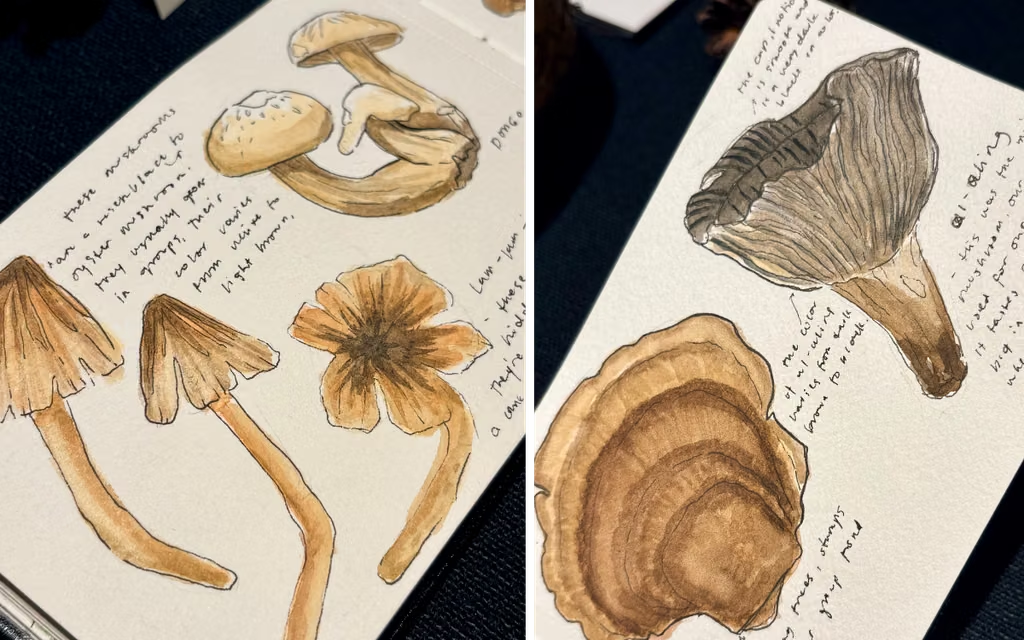
Marco Lobregat of Ministry of Mushrooms, who co-authored The Mushroom Explorer’s Guide to the Cordilleras with Sagada forager Chris Angway, spoke about the value of Philippine wild mushrooms and how they deserve to be taken just as seriously as their European counterparts. As a Frenchman with a passion for fungi, Marco seemed a fitting person to make the case. France, after all, has a long-standing love affair with wild mushrooms, from prized porcini to chanterelles and morels, so you could say he came to the subject with a certain cultural appreciation for what grows on the forest floor.
What struck me was his point that Philippine wild mushrooms could command considerably higher prices if they were better understood and positioned in the international market. Wild mushrooms are highly valued in parts of Europe, where certain varieties fetch premium prices because of their flavor, seasonality, and the labor involved in gathering them. Yet many of our own wild varieties remain relatively obscure outside the communities that know and eat them. We have the biodiversity, the people with the expertise to find them, and the culinary traditions to make good use of them. What we often lack is the recognition that these are valuable ingredients in their own right, rather than just whatever happens to be growing in the mountains.
Of course, putting a price tag on these mushrooms isn’t the whole point. There’s also the question of how to develop a market without exhausting the very resource that makes it possible. Sustainable foraging, proper identification, and respect for the knowledge of local gatherers have to be part of that conversation. Otherwise, we risk turning another piece of Indigenous food heritage into a commodity without giving enough thought to the people and ecosystems that sustain it.
Still, I couldn’t help thinking about how much we overlook in our own backyard. We talk about French truffles and Italian porcini as though exceptional wild mushrooms are something that only happen elsewhere, when the Cordilleras have their own varieties, their own foragers, and their own stories waiting to be told. Perhaps the first step towards appreciating them is simply learning their names – and realizing that some of the most interesting things on our plates are growing in forests we’ve barely begun to understand.
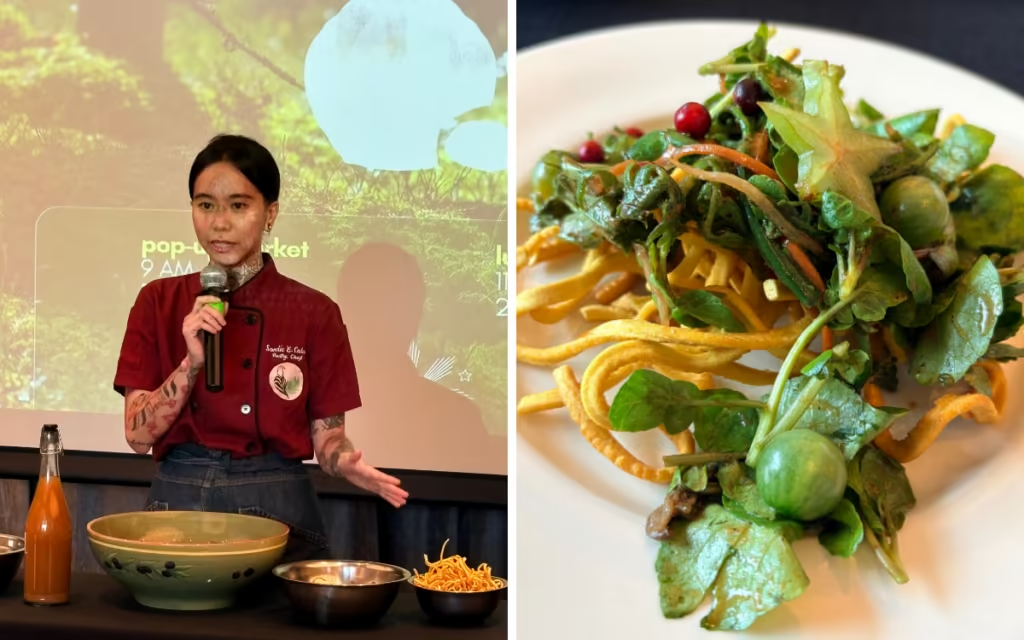
The third course was a pako fern salad with crispy kalabasa that reminded me of shingaling, dressed in a beautifully balanced fermented mushroom vinegar by Sandie Caluag of Fungify. What impressed me almost as much as the vinaigrette itself was watching Sandie explain how she made it without a single measured ratio. No measuring cups, no kitchen scale, no meticulously written recipe to follow. Just her hands, her gut feeling, the sound of the liquid as she worked, and trusting that her ancestors would tell her when enough is enough. There’s something fascinating about watching someone who knows their craft well enough to trust their senses rather than rely on numbers.
The crispy squash brought a satisfying crunch to the dish, playing off the fresh, delicate texture of the fern, but it was the vinaigrette that really held everything together. Its tanginess gave the salad a brightness that kept each bite interesting without overpowering the ingredients. And knowing that the vinegar itself was made from mushrooms made it all the more interesting.
Fermentation is one of those things we often take for granted in Filipino cooking. We readily reach for vinegar, bagoong, patis, and other fermented condiments without always thinking about the time, knowledge, and transformation behind them. Yet fermentation has long been an important way for communities to preserve ingredients, develop flavor, and make the most of what’s available. It’s a process that allows microorganisms to do their thing, breaking down ingredients and creating entirely new flavors, textures, and aromas along the way.
Sandie’s mushroom vinegar was a particularly good example of how fermentation can give an ingredient a second life. Mushrooms are prized for their earthy, savory qualities, but transforming them into vinegar opens up an entirely different set of possibilities. Through fermentation, their character can be carried into a sharp, acidic condiment that adds brightness to a dish while bringing its own depth of flavor. Instead of simply sautéing the mushrooms or throwing them into a soup, you’re using them to create something that can season and elevate an entirely different set of ingredients. It’s a clever way of extending what an ingredient can do, and of making the most of the resources available.
Watching Sandie work without relying on precise measurements brought that point home. Fermentation requires an understanding of how ingredients behave, how flavors develop, and when something has reached the point where it’s ready to use. You can follow a recipe to get started, but knowing what you’re looking for – and trusting your senses to tell you when you’ve got it right – comes from experience. As someone who once made her own kombucha, I know this well enough.
The vinaigrette was also a reminder that preserving heritage cuisine doesn’t necessarily mean recreating an old recipe exactly as it was prepared decades ago. Sometimes, it’s about understanding the principles behind a technique, respecting the ingredients you’re working with, and finding new ways to let them shine. Sandie took mushrooms, transformed them through fermentation, and used the result to bring an otherwise simple salad together. No complicated culinary theatrics, just a good understanding of ingredients and what they can become when you give them a little time.
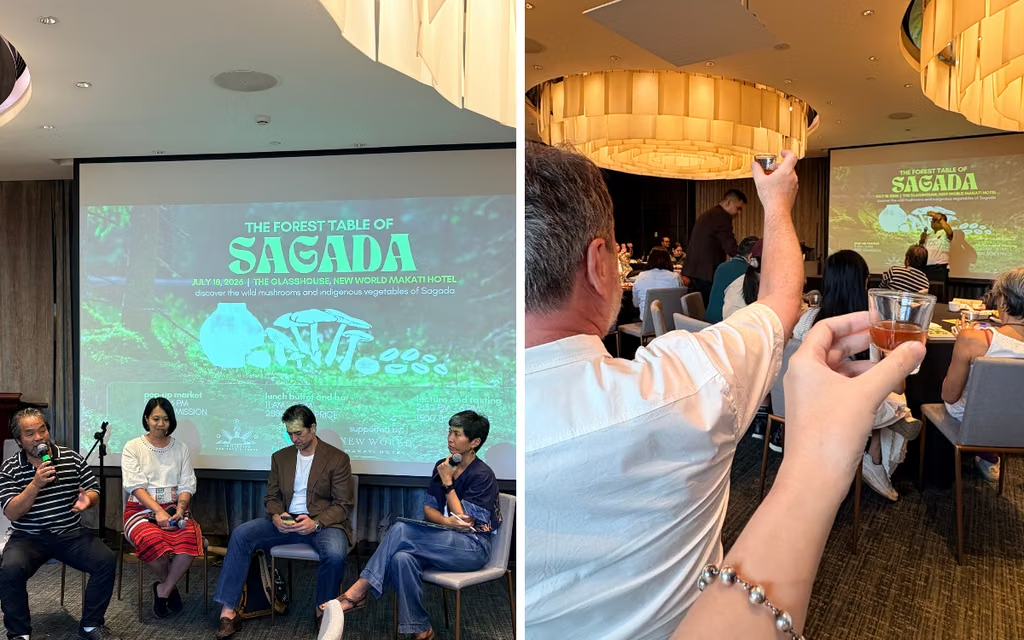
Our last speaker that afternoon was Lope Bosaing of Baguilota Art Space, a coffee farmer and pottery artist, who gave us a potter’s account of land and life. He showed us vessels modeled after the rattan and wooden forms his community had used to mark the stages of life, from birth to death: the tamo, bito, sukum, and the jar used to ferment rice wine. His message was simple but resonant: land is life, and without it, a people risk losing themselves.
To cap off the event, we raised our glasses of tapey for a toast, followed by a community dance around the room. The wine caught me completely off guard by being far sweeter than I expected. I went in anticipating something earthy and rustic, perhaps a little funky from the fermentation, but what I got was closer to a sweet dessert wine. If I didn’t know any better, I’d have mistaken it for a Moscato! Made from fermented rice, tapey was another example of how fermentation can transform a humble staple into something entirely different. It was an unexpected note to end the tasting on, and a fitting reminder that sometimes the best way to understand a cuisine is to leave your assumptions at the door.
But I left thinking about something beyond the food itself: the history that allowed so much of this knowledge to endure. The Cordilleran highlands were never fully brought under Spanish colonial control during more than three centuries of Spanish rule. Many upland communities retained a degree of political and cultural autonomy, allowing their languages, belief systems, agricultural practices, and relationships with the land to continue on their own terms. That history is a reminder that there has never been just one way to be Filipino. Some parts of our identity were reshaped by colonization; others survived it, adapted around it, and continued to flourish beyond its reach.
And perhaps that difference matters more than we realize. The foodways I encountered at The Forest Table of Sagada reflected a relationship with the natural world that goes beyond seeing the land as property or a source of profit. Knowledge was built through generations of gathering, planting, fermenting, cooking, and sharing. The forest wasn’t simply a collection of raw materials waiting to be harvested, and the land wasn’t just an asset to be bought, sold, or developed. These were living relationships, sustained by people who understood that their survival depended on the survival of the places they called home.
It’s a way of thinking that feels increasingly at odds with a world where development is so often measured in investment figures, industrial output, and projected returns. We don’t have to romanticize Indigenous communities or pretend that their lives are untouched by commerce to recognize the value of a different set of priorities. There’s something worth preserving in a worldview that understands land as inheritance, livelihood, identity, and responsibility – not merely something to extract value from.
I couldn’t help thinking about this in light of the ongoing controversy surrounding Pax Silica, the US-led initiative to develop an AI and advanced manufacturing hub in New Clark City. Aeta communities in Capas, Tarlac, have raised concerns about the project’s potential impact on their ancestral lands, homes, livelihoods, and water sources, while government agencies have disputed claims about the extent of displacement and environmental harm. The details remain contested, but the underlying question is hard to ignore: when a development project promises economic opportunity, whose definition of progress gets to take precedence? Reporting on the Aeta communities’ concerns makes clear that, for the people whose lives are rooted in this land, the stakes are not abstract.
It’s difficult to talk about preserving Indigenous knowledge while communities are left fighting to protect the very land that sustains it. You cannot separate a people’s culture from the forests they forage in, the fields they cultivate, or the rivers that provide their water. And you cannot claim to value heritage while treating the people who carry it as obstacles to development. If progress requires communities to surrender their homes and livelihoods for someone else’s vision of prosperity, perhaps we need to ask more questions about what, exactly, we’re progressing toward.
The Cordilleras offer a glimpse of a Philippines that wasn’t entirely erased or remade in the image of its colonizers. It’s a Philippines where knowledge is passed down by doing, tasting, gathering, and sharing a meal. Where the forest is more than a source of raw materials, and the land is something to live with rather than simply extract from. Where culture isn’t something you put on for tourists, but something you practice every day, often without giving it a second thought.
I came to The Forest Table of Sagada thinking I was there to discover what else Sagada had to offer beyond its oranges, etag, and pinikpikan. I left thinking about everything I hadn’t known to ask: who gathered the ingredients, what knowledge went into preparing them, and what kind of relationship with the land made these dishes possible in the first place.